Homeowners in Middlefield see big swings in temperature from October through March. Early frost arrives near Lake Beseck, and Nor’easters can lock the Coginchaug Valley under snow for days. A gas furnace in this climate has to start without hesitation, push steady airflow, and burn clean. Routine maintenance is the difference between a quiet winter and a mid-blizzard breakdown. The ideal time to schedule service is late summer through early fall, with a mid-season check if the system runs hard during single-digit nights.
Direct Home Services provides gas furnace services across Middlefield, Rockfall, and the surrounding Middlesex County towns. The team handles annual tune-ups, repairs, energy-efficient installations, and emergency heat calls. The technicians are trained to catch small issues before they become heat exchanger failures or carbon monoxide risks. This article explains when to book maintenance, what a professional tune-up includes, and how local weather and home styles in Middlefield affect timing and scope.
Why timing matters in Middlefield, CT
Furnaces here start logging runtime hours earlier than most homeowners realize. Cool nights begin around Lyman Orchards in September. By October, morning starts become routine. If a system has a weak ignitor, a dirty flame sensor, or a slow draft inducer motor, that early load exposes it. Scheduling service between August and October gives enough lead time to order parts, correct airflow, and dial in combustion before the first sustained cold snap. It also avoids the rush that happens after the first frost, when appointment windows tighten.
There is another factor in Middlefield: fuel types and system age vary block by block. A 20-year-old single-stage natural gas furnace in a Reeds Gap colonial behaves differently than a newer two-stage propane furnace in a Jackson Hill renovation. Older heat exchangers are more prone to hairline fractures after repeated thermal cycles. Modern condensing models have secondary heat exchangers and condensate drains that need cleaning to keep AFUE ratings near their stated values. Each case benefits from a seasonal rhythm for maintenance.
Practical schedule: pre-season and mid-winter touchpoints
Most homes do well with one full tune-up per year, scheduled in late summer or early fall. Homes with high heating demands or known issues may warrant a mid-season check in January. This second visit is short and focused. It targets airflow, filter condition, and ignition reliability after the heaviest use around the holidays.
For households near Powder Ridge where ski weekends mean set-back schedules and frequent cycling, a mid-season check prevents nuisance lockouts and keeps comfort steady through February storms. For older systems in Rockfall’s 06481 area, technicians watch for early signs of blower motor bearing wear and limit switch fatigue. These parts tend to fail under peak load, not on mild days.
What a professional tune-up includes
A tune-up is more than a quick filter change. It is a structured inspection and adjustment that touches combustion, airflow, safety controls, and electrical health. The process is deliberate and evidence-driven. Direct Home Services uses a 21-point method that checks the heat exchanger, burner assembly, draft inducer motor, gas valve performance, and safeties such as the limit switch and pressure switch. The team also cleans the flame sensor to prevent ignition lockout, tests the ignitor, and verifies that combustion registers a stable, blue flame with correct air-fuel mixture.
Static pressure readings verify duct performance. A clogged return or an undersized filter can starve the blower fan, which shows up as hot limit trips and short cycling. On high-efficiency condensing furnaces, the technician clears the condensate trap, confirms drainage, and inspects the vent pipe for blockage or sagging sections. For modulating and two-stage furnaces, staging logic and thermostat settings are reviewed to match the home’s load profile during New England cold snaps.
Tuning for Middlefield homes: specific parts and symptoms
Age, duct design, and fuel type create predictable patterns.
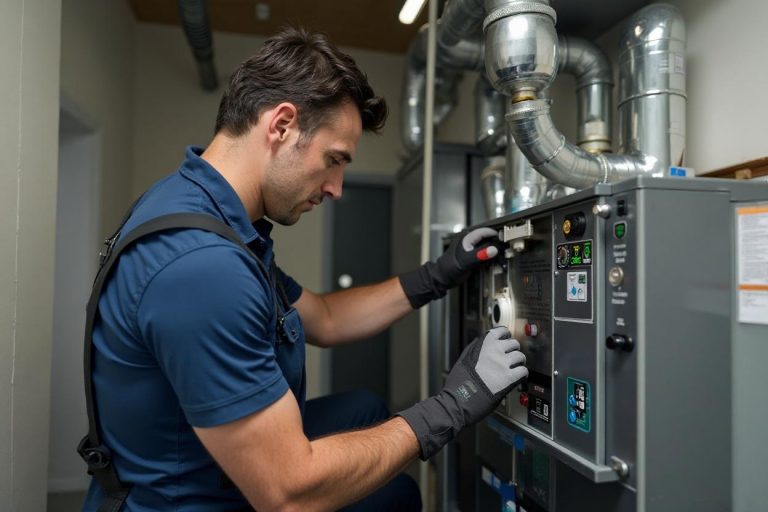
- Short cycling and metallic banging often trace back to a failing draft inducer motor, a clogged air filter, or duct expansion noises. The technician checks the inducer bearings, verifies amperage draw, and replaces a restrictive filter with a properly sized MERV 11 or MERV 13 model that balances filtration and airflow. A yellow pilot flame or lazy main flame indicates incomplete combustion. Causes range from a dirty burner assembly to a gas valve control issue. The team disassembles the burner rack, vacuums debris, and measures gas pressure at the valve to bring the flame back to a crisp blue with defined cones. Ignition failures show as repeated clicking without start, or brief light-off followed by shutdown. A dirty flame sensor is a common culprit. Cleaning the sensor and confirming microamp signal restores reliable ignition. If the hot surface ignitor shows hairline cracks or high resistance, it is replaced to prevent no-heat calls during a blizzard. Blower motor problems present as weak airflow, uneven heating, or a hot furnace that cycles off on the limit switch. The technician checks capacitor health, wheel cleanliness, and motor windings. A balanced blower wheel protects the motor and reduces noise. Heat exchanger integrity is the safety core. Any rust, scaling, or suspected crack gets a closer inspection. A cracked heat exchanger raises carbon monoxide risk. If there is evidence of a breach, replacement options are discussed immediately.
Ideal timing by furnace type
Natural gas furnaces in classic Middlefield colonials tend to benefit from a pre-season cleaning of the burner assembly and inspection of older vent pipes. Propane (LP) furnaces in the Lake Beseck area, where tank pressure can dip during extreme cold, do well with an ignition check and verification of gas pressure settings to handle low ambient conditions. High-efficiency condensing furnaces require particular attention to the secondary heat exchanger and condensate system. Freezing drains and blocked intake vents can shut the unit down during storms.
Single-stage furnaces often short cycle on mild days, so a thermostat strategy and proper filter selection help reduce wear. Two-stage and modulating furnaces deliver quieter, steadier heat, but only if staging is configured correctly and the thermostat communicates with the control board as intended. An improperly set modulating furnace can run like a single-stage and waste energy.
Local context: service across Middlefield and Rockfall
Direct Home Services supports homeowners across Middlefield (06455) and Rockfall (06481). The team is based near Lyman Orchards, which allows for fast response to the entire Coginchaug Valley. Routes cover Reeds Gap, Baileyville, and Jackson Hill with equal regularity. Properties near the Durham line and along the river often have mixed-age ductwork and finished basements with tight mechanical spaces. Technicians carry low-profile tools and flexible camera scopes to inspect the vent pipe and heat exchanger in tight equipment rooms.
Homes around Powder Ridge see higher infiltration on windy slopes. These houses often run a bit longer during cold snaps. Uneven heating can develop between lower and upper floors. The fix is not always a bigger furnace. Many times the answer is sealing return leaks, balancing airflow, and setting fan profiles that move heat without drafty blasts. Local experience helps sort these cases quickly.
Signs that mean “book maintenance now”
Homeowners do not need a codebook to recognize problems. A few symptoms deserve immediate attention because they tend to worsen under stress. Listen for new rattles from the blower compartment, notice if the system turns on and off every few minutes, and watch the flame color through the viewing port. A carbon monoxide alarm that chirps or any traced CO reading requires an urgent shut-off and professional inspection. Rise in gas bills with normal thermostat use suggests declining efficiency or a burner issue. Dry, dusty air and rooms that never warm point to airflow or duct problems.
If a furnace has not had a tune-up in 12 months, schedule as soon as practical. If it has been over two heating seasons, expect a longer visit to bring it back to spec.
What homeowners can do between visits
Homeowners can change the air filter on schedule and keep the area around the furnace clear. A clogged filter is the fastest way to overheat a heat exchanger and trip the high limit switch. For most systems, a MERV 11 filter is a good balance between filtration and airflow. Some duct systems tolerate MERV 13 without issue; others need a media cabinet or a larger return. If in doubt, ask the technician to measure static pressure with your preferred filter in place.
Thermostat settings matter. Aggressive setbacks can cause long recovery runs that highlight weak ignitors and push older exchangers hard. A steadier schedule at a comfortable setpoint reduces cycling and keeps temperature even. For two-stage or modulating systems, use a compatible thermostat that can control staging. Otherwise, the furnace will behave like a basic single-stage unit.
Repair versus replacement: making the call
There is a point at which replacement makes sense. Frequent repairs on a 20-year-old single-stage furnace with a rusted heat exchanger do not serve comfort or safety. Conversely, a 10-year-old two-stage furnace with a failed ignitor and a noisy inducer is a strong candidate for repair. Direct Home Services lays out cost ranges, expected remaining life, and efficiency gains for each option.
High-efficiency condensing furnaces with AFUE ratings of 90% and above can cut gas use by 10 to 30 percent compared to older units. In Middlesex County, where winters run long, that reduction shows up on monthly utility bills. Modern modulating furnaces paired with smart thermostats deliver steady, quiet heat in historic homes without the temperature swings many grew up with.
Brands and equipment support
The service trucks carry common parts for Goodman, Bryant, York, and Rheem. The team also services Lennox, Trane, American Standard, and Mitsubishi hybrid or dual-fuel systems. As a Carrier authorized specialist, Direct Home Services installs and maintains Infinity series condensing furnaces. These systems, when set up with proper duct static and clean intake and exhaust runs, deliver strong comfort and reliable efficiency across Middlefield winters.
For homeowners comparing systems, the discussion covers burner type, blower technology, AFUE rating, and control strategy. A two-stage furnace paired with a variable-speed blower often strikes the right balance for a Reeds Gap colonial with older ducts. A modulating furnace shines in a tight, well-insulated Jackson Hill home where low, steady heat keeps every room even.
Safety and code compliance
Connecticut mechanical code sets clear standards for venting, gas piping, and combustion air. Direct Home Services’ technicians hold CT S-1 licenses and NATE certifications. That matters when replacing a furnace in a small mechanical closet or adding a high-efficiency unit with sidewall termination. The team sizes vent pipe runs correctly, sets proper clearances, and confirms draft with instruments rather than guesswork. Every installation is pressure-tested and documented.
On maintenance visits, the technician uses a combustion analyzer where applicable and checks for CO at the supply plenum. If there is any suspicion of a compromised exchanger, the furnace is tagged, the homeowner is briefed, and replacement paths are discussed without delay.
Service cadence with real numbers
A typical Middlefield furnace runs anywhere from 1,200 to 2,000 hours in a heating season, depending on insulation, window age, and setback habits. Every 200 to 300 hours, dust accumulates on the burner face and the blower wheel picks up debris. That accumulation lowers efficiency and stresses moving parts. Annual maintenance resets the baseline before the high-use months from December through February.
Most minor parts — ignitors, flame sensors, capacitors — have service lives in the 3 to 7-year range. A tune-up identifies the weak link early. Heat exchangers last longer, often 15 years or more, but corrosion or previous overheating shortens that span. Finding a hot spot or rust line before a crack forms avoids a dangerous failure and a mid-storm shutdown.
Local availability and response
The company maintains 24/7 emergency dispatch for no-heat calls during Connecticut blizzards. Trucks stage near Middlefield’s main roads and can reach Rockfall, Durham, Meriden, Wallingford, and Higganum quickly. In heavy snow, the team rotates to keep response times steady and communicates arrival windows by text. Homeowners near Lyman Orchards and along the Coginchaug River benefit from proximity. From first call to diagnosis, the goal is steady heat restored safely.
The maintenance visit, step by step
To make scheduling simple, here is what homeowners can expect during a standard tune-up.
- System interview and baseline test: The technician asks about recent symptoms, checks the thermostat, and runs the furnace to observe ignition, flame, and airflow. Safety and combustion: The heat exchanger is inspected for rust and fractures. The flame sensor is cleaned, the ignitor is tested, and gas valve operation is verified. Airflow and electrical: The blower fan is inspected and cleaned as needed. Static pressure is measured. Capacitors, wiring connections, and the limit switch are tested. Condensing system checks (if applicable): The draft inducer motor is tested, the condensate trap is cleaned, and the vent pipe is inspected end-to-end. Report and recommendations: Findings are explained in plain language with photos where helpful. Any urgent repair or upgrade options are priced clearly.
This process aligns with real-world issues found in Middlefield basements and utility rooms. It also provides a paper trail for warranty claims and helps predict future needs before they disrupt heat in January.
Common homeowner questions
How often should a furnace in Middlefield get maintenance? Once a year, ideally between August and October. If the home hosts guests over holidays and the furnace runs long hours, add a quick mid-winter check.
What filter should be used? MERV 11 is safe for most systems. MERV 13 is fine if static pressure stays within the manufacturer’s limits. A technician can measure and advise.
What about uneven heating between floors? It is often a duct balancing issue, a weak blower, or a clogged return. An oversized furnace can cause short cycling and uneven comfort as well. Testing and airflow adjustments usually solve it.
Is a cracked heat exchanger repairable? No. A cracked exchanger requires replacement for safety.
Are Energy Star systems worth it? In this climate, yes. High-efficiency condensing furnaces reduce gas use, especially in older homes after sealing ducts and pairing with a variable-speed blower.
Special neighborhood considerations
Historic homes in Rockfall and near the Levi E. Coe Library sometimes have restrictive return paths. Maintenance includes a careful look at filter cabinets and return drop sizing to prevent chronic high static pressure. Homes near Wadsworth Falls State Park and the Durham line often mix original duct trunks with newer branch runs. The result can be warm rooms and cool rooms on the same floor. Balancing dampers and slight fan speed adjustments make a measurable difference.
Vacation homes around Lake Beseck that sit empty during the week benefit from smart thermostats gas furnace services and gentle set-backs. The goal is a recovery profile that does not spike cycle counts. Propane users should request a gas pressure check before winter’s coldest week, since tank conditions affect ignition reliability.
Installation and replacement options
If maintenance reveals an aging furnace beyond economical repair, the team reviews replacement paths. A common upgrade in Middlefield is a two-stage or modulating high-efficiency condensing furnace with an AFUE of 95% or higher. Paired with a properly sized vent system and a modern thermostat, it delivers steady heat with lower gas consumption. For homes considering future air conditioning upgrades, a variable-speed blower sets the stage for improved summer dehumidification.
Direct Home Services installs Carrier Infinity systems and supports Goodman, Bryant, York, Rheem, Trane, Lennox, and American Standard. For hybrid or dual-fuel interest, Mitsubishi solutions integrate well when electric rates and propane pricing favor shoulder-season heat pump operation and gas heat during deep winter.
Clear pricing signals and an easy next step
To keep preparation simple for the first frost, Direct Home Services offers a $99 Seasonal Furnace Safety Inspection for Middlefield and Rockfall homeowners. The visit covers the full 21-point check and documents any issues with photos. If a repair is needed, the technician explains the options and timeframe. Financing is available for qualified installations, and all work follows Connecticut mechanical code.
The company stands behind repairs with a parts and labor warranty and remains available 24/7 during storms. Every installation is performed by CT S-1 licensed, NATE-certified technicians and uses Energy Star rated equipment when applicable. Homeowners get clear scheduling, on-time arrival, and careful cleanup.
When to book your appointment
Book maintenance now if the system has not been serviced in the professional gas furnace repair past year, if there are new noises, ignition delays, frequent cycling, a yellow flame, or rising gas bills without a change in thermostat settings. For Middlefield residents in the 06455 zip code and Rockfall in 06481, scheduling before October avoids the seasonal rush and secures earlier appointment windows.
Direct Home Services provides gas furnace services that match the demands of Middlesex County winters. The team prioritizes safety, clean combustion, and stable airflow so homes near Powder Ridge, Lyman Orchards, and throughout the Coginchaug River corridor stay warm without surprises. Schedule your furnace repair or tune-up today and set up a winter that starts on time, runs quietly, and ends with lower utility bills.
Direct Home Services provides HVAC repair, replacement, and installation in Durham, CT. Our team serves homeowners across Hartford, Tolland, New Haven, and Middlesex counties with energy-efficient heating and cooling systems. We focus on reliable furnace service, air conditioning upgrades, and full HVAC replacements that improve comfort and lower energy use. As local specialists, we deliver dependable results and clear communication on every project. If you are searching for HVAC services near me in Durham or surrounding Connecticut towns, Direct Home Services is ready to help.
Direct Home Services
57 Ozick Dr Suite I
Durham,
CT
06422,
US
Phone: (860) 339-6001
Website: https://directhomecanhelp.com/
Social Media: Facebook | Instagram
Map: Google Maps